2nd grade spelling words
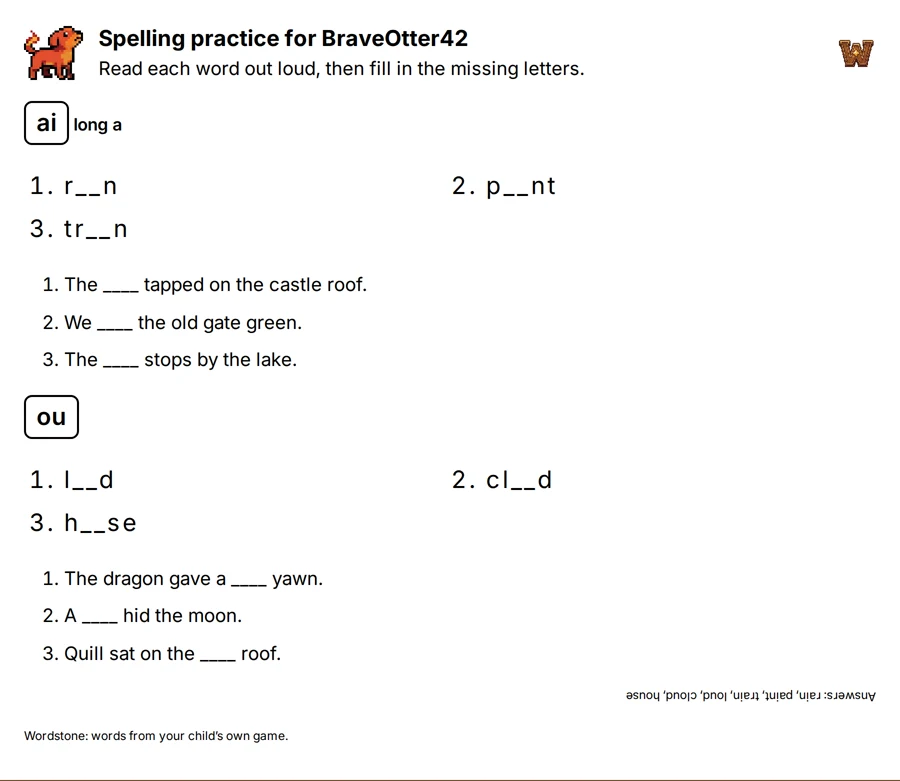
15 free lists and 534 words, grouped by spelling pattern. Hear every word, print a practice sheet, or take a test online.
ar and or words
r changes the vowel's sound
star, car, park, farm…
37 words
er, ir, ur words
Three spellings, one sound: learn which word uses which
her, fern, bird, girl…
36 words
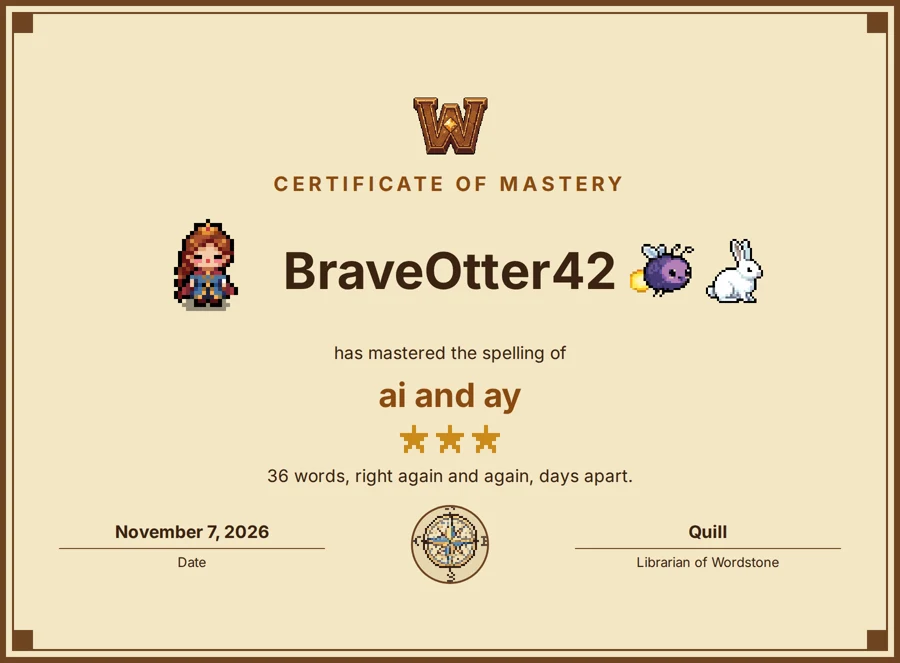
ai and ay words
ai in the middle, ay at the end
rain, tail, mail, day…
37 words
ee and ea words
Two common spellings of long e
tree, feet, seed, leaf…
37 words
oa, ow, oe words
oa in the middle, ow at the end
boat, coat, road, snow…
37 words
igh, ie, y words
igh in the middle, y at the end of short words
night, light, pie, tie…
35 words
oo, ew, ue words
oo has two sounds: moon and book
look, moon, food, book…
36 words
aw, au, al words
aw at the end, au in the middle
saw, draw, haul, ball…
38 words
ow and ou words
ou in the middle, ow at the end
cow, town, cloud, house…
38 words
oi and oy words
oi in the middle, oy at the end
coin, boil, boy, toy…
33 words
Silent letters kn, wr, mb, gn
Some letters are written but not heard
knee, know, knock, knit…
30 words
Three-letter blends
Three consonants, all heard
street, string, scrap, splash…
34 words
One-syllable homophones
Same sound, different meaning: the sentence decides
here, their, they're, too…
35 words
Doubling before -ed and -ing words
One vowel, one consonant at the end: double it
hopped, running, swimming, stopped…
34 words
Dropping silent e words
Drop the e before an ending that starts with a vowel
smiled, making, riding, hoping…
37 words
What spelling words should a 2nd grade student know?
Second grade is the year of vowel teams and r-controlled vowels: ai and ay, ee and ea, ar and or. Children also meet silent letters, homophones, and the rules for adding -ed and -ing.
These lists follow the order US structured-literacy programs teach spelling, so each one builds on the last. Schools differ, so use your child's own class list first if they bring one home.
Practicing at home
- Practice one pattern at a time, so the rule stays in view.
- Say the word, have your child spell it from memory, then check it together.
- Keep it short and often. A few words a day is easier to keep up than one long session.
- Come back to the words they missed a few days later.